

Current Assessment
THINKING THE UNTHINKABLE
Posted October 9, 2026
Thinking the Unthinkable
The world is in an unsustainable state. The global financial state is in a state of peril. The global economy, as well as the US economy, is deteriorating, failing to provide adequate levels of food, housing, education and health care for its citizens. The global political situation, and in particular, the political situation in Europe and the US has significantly declined from the more democratic state it was in 20 years ago. Two wars are currently in progress and neither seems to be approaching an end. Due to even worse deterioration in other countries, human migration is getting out of control. Cultural decline is also underway. In the following short and unfinished essay, I invite you to ponder the Unthinkable: In the engineering business, this is called “Worst Case Scenario” – WCS. In a developing situation, if we provide for the WCS, everything else is gravy.
The Process of Collapse
As stated above, the financial, political, economic and social conditions in the US and much of the rest of the planet, right now, are deteriorating. I prefer to define this situation as a state of collapse, which, in this era of Overshoot, is most likely irreversible.
The word “collapse” calls to mind a catastrophic scenario, much like an old house tipping over and collapsing, or a dam with a huge leak in it, about to disintegrate and wash downriver. But the type of collapse I am suggesting here is a more gradual process of deterioration. Conditions, infrastructure and the environment are just gradually getting worse in fits and starts. As conditions continue to deteriorate, the process will pick up speed and often experience a catastrophic event, much like the recent catastrophic glacial landslide and flood in Tibet.
These trends of deterioration and collapse that have only continued to strengthen are discussed by Dimitry Orlov in his book, “The Five Stages of Collapse.” Dimitry Orlov is a trained engineer who witnessed the collapse of his native Russia. His book outlines 5 stages in the process of collapse: a. Fiscal or financial stage b. Economic or commercial stage c. the political stage of collapse. d. social collapse and finally, e. Cultural collapse (This last topic is really bad news). It has become apparent to me that these stages of collapse are not linear, but are co-temporary: that is, these stages can and do happen in parallel. Extended or advanced collapse in one stage can exacerbate collapse in the other stages.

Fiscal or financial:
At the present time, the fiscal authorities, the Federal Reserve and the Treasury Department and the stock markets are scrambling to keep the whole show together. I and other experts think our fiscal system is teetering on the edge of a serious (I’ll avoid the use of the overworked term “apocalyptic”.) disaster. The Federal Reserve is raising interest rates, while the Treasury Department is scrambling in the opposite direction, trying to buy back Federal securities and lower interest rates. An episode of the Three Stooges comes to mind. The Federal debt has exceeded the psychologically significant threshold of $40 trillion. US bond yields are rising as international bond holders continue their sell-off. And the stock markets are historically overpriced yet continue their episode of irrational exuberance. On top of that, the mess in the Middle East continues to threaten the supplies of fossil fuels and fossil-fuel created fertilizers, thus threatening the world’s food supplies, including our own. And what we keep hearing from the sycophants in the Trump regime is “All’s well! Fear not!” I’m waiting for an impending fiscal crisis to break upon the scene and plunge the country and probably the world into an extended recession. As all the experts stress though, nobody knows when this crisis will occur.
https://www.nytimes.com/2026/08/18/business/oil-prices-bonds.html?searchResultPosition=2
https://www.crfb.org/blogs/net-interest-costs-will-double-again-over-next-decade
https://www.pbs.org/newshour/show/national-debt-nears-40-trillion-how-we-got-here-and-why-it-matters
https://www.currentmarketvaluation.com/models/price-earnings.php
Since posting those links, the current situation continues to get more precarious.
https://www.nytimes.com/2026/10/01/business/adjustable-mortgage-rates.html
https://www.nytimes.com/2026/10/01/business/bond-yields-10-year-treasury.html
Economic or commercial:
On a global scale, many experts are convinced that the process of Overshoot has already set in, which I agree with.
There are a number of trends that are already underway: Globally, almost 3 billion people cannot afford a healthy diet. https://ourworldindata.org/food-prices Food security in the US is declining also, as the Trump regime has cut off SNAP benefits and make them more difficult to attain.
According to the World Bank, Global GDP in almost every country continues to rise. https://data.worldbank.org/indicator/NY.GDP.PCAP.CD But global income inequality is high and growing. https://globalinequality.org/global-income-inequality/ In the US, at least, the standard of living, has been declining recently. In the US, in the past 5 years has been falling significantly. https://www.atlantafed.org/research-and-data/data/home-ownership-affordability-monitor The cost of housing continues to pull away from the abilities of working-class Americans to afford it.
As I have witnessed personally here in Sequim, millions of retired Americans have been forced out of their homes and into living full time in RVs. -- https://www.youtube.com/watch?v=jWsuvMcbNls&t=295s
https://www.youtube.com/watch?v=2TCZOeyrSac&t=955s
AI Overview: Gen Z faces a historic housing affordability crisis driven by a combination of high home prices, mortgage rates near 7%, and average personal debt loads of $94,000. [1]
📊 The Economic Reality
- Sky-High Prices: Median U.S. homes exceed $403,000 against average entry-level wages of roughly $66,600. [1]
- Staggering Debt: Gen Z carries more personal debt than older generations did at the same age, largely due to student loans and living costs. [1]
- Low Ownership: Only about 26% of Gen Z own their homes, with rates flatlining due to severe market entry barriers. [1]
- Delayed Milestones: Roughly 84% of young adults report delaying major life events—like marriage or children—just to save for housing. [1]
⚠️ Root Causes of the Crisis
- Supply Shortage: A lack of new construction and older generations holding onto properties restrict available inventory. [1, 2]
- Underemployment: Roughly half of recent college graduates are underemployed in roles that do not support a traditional mortgage. [1, 2]
- Stagnant Savings: High rent burdens prevent the accumulation of a standard 20% down payment. [1]
💡 Alternative Strategies & Workarounds
- Co-Ownership: Purchasing fractional shares or teaming up with friends or family to split costs. [1]
- Alternative Housing: Opting for modular units, tiny homes, or accessory dwelling units (ADUs) on family land. [1]
- Geographic Arbitrage: Moving to mid-sized or smaller metro areas with lower cost-of-living thresholds, though entry-level job pay may also be lower. [1]
Here on the Peninsula, housing affordability is bleak, to say the least.
Access to healthcare in the US is currently in a crisis.
AI Overview” Healthcare affordability means paying for medical care, prescriptions, and insurance without skipping basic needs or going into debt. [1]
The Current Crisis
- High Costs: U.S. healthcare spending reached $4.9 trillion (18% of GDP), driven mostly by high prices rather than extra care. [1]
- Delayed Care: 44% of adults find health care costs hard to afford, and 36% skipped or delayed care because of price. [1]
- Medical Debt: 41% of adults hold medical or dental debt, and half cannot afford a sudden $500 medical bill out of pocket. [1]
- Widespread Worry: 64% of people worry about affording healthcare, making it a top financial stress. You can review detailed survey findings on the KFF Health Costs Report. [1]
Why Costs Are High
- No Price Limits: Unlike other wealthy nations, the U.S. does not cap prices, meaning the same medical procedure can vary wildly in cost between hospitals. Read more on the underlying drivers through the NCBI Analysis of American Health Care. [1]
- Fee-for-Service: Doctors and hospitals are paid for the quantity of tests and procedures they do rather than how much they improve health. [1]
- High Drug Prices: Prescription medications cost significantly more in the U.S. than in other countries.
The Trump regime is exacerbating this crisis by cutting off and weaponizing more Federal healthcare subsidies, like Medicaid.
The employment trends, on the surface, look like they’re in good shape, with unemployment at historically low levels – 4.xx percent. Behind the scenes, unfortunately, wages are not keeping up with price inflation. Inequality in the country is at historically high levels and continuing to increase. https://www.epi.org/publication/charting-wage-stagnation/
On a global scale, the Trump regime’s tariff bullying is having the effect of isolating America and its commerce from the rest of the world. Trump has finally pissed off the Canadians enough to cause that country to turn elsewhere for new trading partners. And of course, Trump’s trade war with Canada is all over the place in the news these days. https://www.nytimes.com/2026/08/25/world/canada/canada-tariffs-trump-carney-retaliatory.html These trading partner trends will probably be mostly irreversible as America’s trading partners lose trust. The same is happening with American trade relations with the EU. In fact, the EU has taken the step of welcoming Canada as an “Associate EU member”. https://www.bbc.com/news/articles/cwly7vkke4jxo These trading partner trends will probably be mostly irreversible as America’s trading partners lose trust. China will increasingly call the shots in the trans-Pacific trade situation.
On top of all that, climate change is continuing to take an ever-bigger bite out of food production (drought) and a bigger bite out of the economy with disaster damage, such as storms and flooding.
To sum up: I don’t see an impending economic crisis, just a general and continual decrease in the American economic situation.
Political: The American political system, with the inauguration of Trump 2.0, has entered an unprecedented state of authoritarianism that continues to worsen. When Trump assumed power again, as far as I’m concerned, American democracy ceased to exist. The Republic is gone. There is no reason for the pledge of allegiance – the “republic for which it stands” ceased to exist. A fascist style autocracy has grabbed control and continues to consolidate its power. https://www.theatlantic.com/ideas/2026/01/america-fascism-trump-maga-ice/685751/
A very conservative Supreme Court is compliant with Trump’s authoritarianism. This present Court, to me, is little more than a hypocritical self-justifying joke. With its doctrine of the “Unitary Executive”, it has granted Trump many judicial victories in his mission to dominate the US. The American GOP dominated Congress has abdicated its Constitutional role of sharing power. The narcissistic Orange Menace has taken off like a bandit. Using what amounts to his paramilitary force, ICE, he’s engaged in the violent ethnic cleansing of the country. ICE has left dead citizens, broken families, and deportations to 3rd countries in its violent wake.
Trump has weaponized the DOJ, putting his sycophant, Todd Blanche in charge, and is turning the DOJ into his personal Department of Retribution. https://www.pbs.org/newshour/show/how-blanche-is-shattering-dojs-standard-of-political-independence Trump has blatantly engaged in consolidating his control of the news media and the First Amendment, as every authoritarian does. https://www.nytimes.com/2026/09/26/business/media/trump-white-house-press-ban.html Using his unconstitutionally seized tariff powers, with the silent assent of a neutered Congress, he is engaged in bullying other nations around the world, and particularly America’s allies and chief trading partners. https://www.theguardian.com/commentisfree/2026/aug/25/the-guardian-view-on-trumps-economic-threats-bullies-can-overplay-their-hand This bullying is alienating many, if not all, of America’s allies.
And to top that off, as everybody is aware, back in February, the Orange Menace, with the urging of his good buddy, indicted felon, Benjamin Netanyahu, unilaterally unleashed a new war upon Iran and the Middle East. American munitions and military readiness have declined radically as a result, probably resulting in an unprecedented American military vulnerability. https://www.cfr.org/articles/the-u-s-munitions-crisis
Meanwhile, back at home, the polarization of the American electorate is at all-time highs, resulting in unprecedented gerrymandering, restrictions of freedoms and increasing outbreaks of outright violence, both from the left and the right. The electorate is probably about to commence a swivel from the right to the left as they look for relief from their increasingly unbearable economic distress. https://www.aljazeera.com/news/2026/10/3/bordering-on-angry-the-state-of-play-as-us-midterms-enter-final-month The swivel to the left, while welcomed by me, will most likely not get them the relief they are looking for. I predict that the political situation will continue to deteriorate, and the social contract between the Federal government and the people will continue to unravel.
The rise of a powerful and privileged American oligarchy is another topic that deserves more discussion in a later post.
Here are some reasons I am pessimistic about the condition of American democracy and the prospects for its return.
- A majority of American voters displayed their lack of understanding of and/or their lack of concern about democracy when they voted for a known dishonest authoritarian and convicted felon. We must assume that much of this ignorance and/or lack of concern persists today.
- A majority of Trump’s “base” are brainwashed cult members. The nature of their relationship to Trump meets all or most of the criteria of a cult. See “The Cult of Trump” by Steven Hassan. https://www.simonandschuster.com/books/The-Cult-of-Trump/Steven-Hassan/9781982127343
- Many of the socially beneficial institutions of the Federal government are either being abolished or hijacked by the present authoritarian regime. This includes the DHHS, https://thehill.com/policy/healthcare/6128942-senate-democrats-rfk-jr-overhaul-preventitive-services-task-force-criticism/ , the CDC, Department of Education and the DOJ. Under Pete Hegseth, the Trump regime is seeking to politicize the American military. Many key personnel and their expertise and experience have either resigned or been fired. ICE has been transformed into what amounts to a paramilitary force. These institutions, at the very least, will have to be rebuilt, with the leadership and funding provided by Congress.
- Only the Democratic Party still supports democracy, and it appears to be the only pathway to a return to democracy. If the Democrats regain the House and even the Senate, they will just be in a state of gridlock with Trump. https://www.usatoday.com/story/news/politics/elections/2018/11/07/election-results-2018-donald-trump-threatens-democrats-gridlock/1891146002/ The Democrats will have to gain unchallenged power in the Senate, House and Presidency to credibly rebuild our democratic institutions in a timely manner.
- The social and economic conditions of both white collar and blue-collar workers continue to deteriorate. The working class is already being disillusioned and disappointed by their chosen autocratic leader. This in turn will continue to lead to increasing resentment, anger, loss of trust and deteriorating social and cultural conditions at the national level. I suspect that this will contribute to increasing levels of criminal, political and federal violence. The social and political momentum now is downhill: a continued unravelling of our social and economic institutions.
For these reasons, I am quite skeptical about the prospects of a quick return to democratic governance (democratic Republic) at the federal level. I believe that we need to seriously ponder how we citizens at the state and local levels can manage our well-being with an increasingly dysfunctional Federal government, and perhaps in the extreme case, without the Federal government at all. I believe it’s time to begin to think the Unthinkable
Social:
It’s a little hard to sort the social situation from the political situation. Politics derives its state from the social situation.
Social unrest is reaching serious levels in several European countries, caused by the increasing inability of European welfare states to take care of their citizens.
Civil unrest in reaction to government budget austerity measures has been serious recently in France.
AI Overview:

Widespread civil unrest and student-led protests are occurring across France, centered on severe school funding issues, staff shortages, and poor facility conditions. [1, 2]
Key Details of the Unrest
- Causes: High-school and university students began demonstrating over decaying school infrastructure (water leaks, mold, rat infestations), overcrowded classrooms, and a lack of teachers. Labor unions and political groups have since joined or expanded the movement. [1, 2, 3, 4]
- Scale & Scope: Over 250,000 people have participated in nationwide demonstrations spanning more than 40 cities, including Paris, Lyon, Marseille, Nantes, and Strasbourg. Hundreds of high schools have faced blockades or closures. [1, 2, 3, 4, 5]
- Violence & Clashes: Demonstrations in several major cities have turned violent, featuring street fires, barricades, and property damage. Riot police have deployed tear gas, water cannons, and rubber bullets to disperse crowds. [1, 2, 3, 4]
- Casualties & Arrests: Thousands of individuals have been taken into custody by authorities, and hundreds of protesters, students, and police officers have reported injuries. [1, 2, 3]
Spain has a housing crisis. The eviction and death of an 87-year-old woman recently sparked massive protests in Madrid. https://www.npr.org/2026/09/28/nx-s1-5983303/encampment-protest-madrid-housing-crisis
Violent protests broke out in England and Northern Ireland just recently. -- https://www.nytimes.com/2026/06/11/world/europe/northern-ireland-stabbing-immigration.html
Budget cuts in Belgium sparked large protests in Brussels just recently also. –
Gemini AI Overview:
Belgium
- Austerity and Budget Rallies: Tens of thousands of protesters and trade unionists flooded Brussels to protest proposed budget cuts and austerity measures pushed by Prime Minister Bart de Wever. [1, 2]
- Violence: Marches near Brussels Central Station escalated as groups set fires and built street barricades. Police responded with water cannons and tear gas, resulting in roughly 60 arrests. [1, 2, 3]
In Europe, it appears that the populace is losing trust in their elected governments.
Violence in the US is rising also. Trust in one another is at a low and is declining. The Rise of Political Violence in the United States: https://www.journalofdemocracy.org/articles/the-rise-of-political-violence-in-the-united-states/
AI Overview: According to the Princeton School of Public and International Affairs, political violence in the United States is increasing in 2026 to levels not seen since the 1970s. [1, 2]
Current Trends and Data
- Rising Risks: Researchers at the Princeton Bridging Divides Initiative report that political violence and threats against public officials have grown worse heading into the 2026 midterms. [1, 2]
- Election Threats: The Center for Strategic and International Studies notes that upcoming elections face a heightened climate of intimidation and security challenges. [1]
- Mainstream Involvement: Researcher Robert Pape states via Wired that threats often come from regular citizens rather than fringe groups, creating a dangerous collision between state power and public protest. [1]
Causes and Public Views
- Mixed Motivations: The Carnegie Endowment for International Peace reports that violence is driven by many factors, including mental health struggles, frustration with the government, and non-ideological issues. [1]
- Public Attitudes: Studies from the University of California, Davis (via PLOS One) show that while most Americans reject violence, justification for physical force varies across different political groups. [1, 2]
Racism, particularly in the South, has become open and blatant: South Asians Face Surging Racism in America: https://www.nytimes.com/2026/09/24/us/politics/south-asian-indian-american-racism.html
AI Overview: Anti-Muslim rhetoric and state-level policies have risen sharply across Texas, impacting public life, education, and everyday interactions for the state's Muslim communities. [1, 2]
Political Rhetoric and State Actions
- Targeting Institutions: According to the Texas Tribune, Gov. Greg Abbott and Attorney General Ken Paxton have launched investigations into Muslim organizations and attempted to block master-planned communities and real estate developments marketed to Muslims. [1, 2]
- Policy and Directives: Gov. Abbott threatened to pull state funding from airports with foot-washing stations, ordered the cancellation of a private water park celebration for an Islamic holiday, and declared the Council on American-Islamic Relations (CAIR) a terrorist organization. [1, 2]
- Campaign Messaging: The The Guardian reported that anti-Muslim rhetoric heavily featured in primary and mid-term campaign trails, moving from political talking points into policy proposals aimed at restricting Islamic practices like halal food and public calls to prayer. [1, 2]
Impact on Daily Life and Communities
- Harassment and Fear: Congregants and families at mosques across Dallas-Fort Worth, Houston, and other areas report an increase in verbal harassment, online threats, and intimidating encounters in public spaces. [1, 2]
- Civil Rights Pushback: Organizations like CAIR-Texas have actively condemned legislative proposals seeking to curb religious liberties, emphasizing that Muslim Texans face mounting pressure to defend constitutionally protected practices. [1]
Changes in Public Education
- Curriculum Rewrites: The Texas State Board of Education approved updates to social studies standards that critics and reports note present early Islam and historical conflicts through a framework that disproportionately characterizes Muslims as military adversaries or threats. [1, 2]
- Broader Religious Push: These educational shifts align with broader legislative pushes by state leaders to integrate Christian practices—such as required prayer time and mandatory Bible readings—more firmly into public school environments. [1]
Gun ownership is at an all-time high: The Recent Rise of Women Gun Owners -- https://www.rand.org/pubs/commentary/2026/09/the-recent-rise-of-women-gun-owners.html Even the left is beginning to arm itself. The social contract is unraveling.
However, there still seems to be substantial neighborhood social cohesion in parts of the country. Residents in the Minneapolis neighborhoods coalesced to resist ICE brutality and to come to the aid of victims of this brutality. https://www.npr.org/2026/01/16/nx-s1-5677712/ice-surge-sparks-fear-and-resistance-in-minneapolis Based on occasional reports on PBS, there appear to be pockets of social cohesion here and there, seeking to improve the quality of life of its citizens, particularly the less fortunate among them. While the social condition of the country has declined, I suspect that a key benchmark of American social collapse will be marked by the breakup of the Union and the appearance of outright secession, whether from the right or the left.
Cultural: We haven’t resorted to the barter system yet. We haven’t regressed to local tribal entities nor thrown up walls around our cities yet. Mad Max hasn’t arrived here in this country. I can’t say the same for some African countries, like Eastern Sudan. Previews of coming attractions for us?
On top of all above data, another trend has also set in: birth rates are declining, and as predicted 50 years ago, global population growth is leveling off and may begin to decline soon. Many countries, including the US, are beginning to face a growing demographic problem.
AI Overview
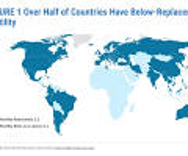
The global birth rate and total fertility rate are falling rapidly, with over 70% of the world living in sub-replacement societies. [1, 2]
Current Statistics and Trends
- Global Rate: The worldwide total fertility rate (TFR) has dropped from about 5 children per woman in 1950 to roughly 2.2 today, nearing the generational replacement level of 2.1. [1, 2]
- Regional Extremes: East Asia has the lowest rates globally (South Korea around 0.76, Taiwan and Hong Kong below 0.8). Meanwhile, parts of sub-Saharan Africa—such as Chad and Somalia—maintain high rates near 5.8. [1, 2]
- Major Nations: India's fertility rate dropped below replacement level for the first time, joining countries like China, the United States, and Brazil. [1, 2]
Key Drivers
- Socioeconomic Shifts: Increased access to modern contraception, higher female educational attainment, and career prioritization delay or reduce childbearing. [1, 2]
- Economic Pressures: Skyrocketing housing costs, expensive childcare, and general economic instability discourage families from having more children. [1, 2]
- Lifestyle Changes: Modern digital habits and increased smartphone use among young adults reduce in-person social interactions. [1]
Potential Impacts
- Economic and Social Strain: Shrinking workforces struggle to support rapidly aging populations, threatening pension systems, healthcare, and social security. [1, 2]
- Economic Adaptation: Some economists note that labor shortages can paradoxically force companies to innovate and increase worker productivity. [1]
- Global Shift: Projections indicate the total world population may peak around the 2050s before entering a prolonged decline. [1]
-------------------------------------------------------------------------------------------
The Unthinkable Questions as They Apply Locally
West Coast States and the Federal Government
State Level
First: How can the state of Washington and/or Oregon and/or California deal with an increasingly dysfunctional federal government? How likely are the West Coast states to be subject to reduced or weaponized Federal revenues or, perhaps, none at all? Could Washington or a union of Washington State, Oregon and California be able to attain and maintain a state of self-sufficiency as federal resources and services are reduced, eliminated or weaponized? Do one or more of these 3 states get more benefits from the Federal government than the sum of revenues they pay into the Federal government? (Balance of payments issue)
A strong consideration in this discussion are the major military bases located in Washington State: Bremerton Naval Base, Fort Lewis, Bangor submarine base, Naval Air Station Whidbey Island, Naval Station Everett, McChord and Fairchild AFBs, and others. These bases contribute a lot of commercial activity, jobs and local revenue. Loss of these bases to the Federal Government would present a major federal military vulnerability. Loss of these bases would present a major economic liability for the state.
I do not believe the Federal government is going to return any time soon to its original state of stable democratic institutions and support for the “general welfare”. These essential and socially beneficial institutions, their services and trust in them, as well as essential international trust and cooperation, are being deliberately and probably irretrievably dismantled by the far-right fundamentalist Trump Regime and oligarchs. Besides the common defense, what federal benefits does this state find essential and irreplaceable? Is this too far out to think about? I don’t think so.
The European Union, slowly and reluctantly, is beginning to grapple with this very question: “Can we do without the United States as an essential partner?” The obvious answer to this author is “Yes”, especially if Germany and the Nordic countries rearm and acquire their own nuclear weapons. Canada also is grappling with the same question and is beginning to take the exit lane off the Canada-US freeway.
I believe we citizens on the West Coast would do well to consider these questions: How could we get along with reduced Federal Government services and revenue? Could we get along without the EPA, the DHHS, the CDC and Department of Education? Even more urgently, how could we get along without the Social Security Administration, Medicare and Medicaid and/or drastically reduced SSA checks and Medicare reimbursements? I am convinced that these frightening and mind-boggling questions need to be carefully considered and some plausible answers offered, if only as a worst-case scenario.
As with the EU and Canada, an exit from the Federal Union most likely would have to be a slow and gradual process, hopefully peaceful. It would be a migration to a state of independence from our crippling dependence upon an increasingly authoritarian Federal regime. The American voters are always welcome to surprise me and vote for an immediate return to our 250-year-old democratic Republic.
Clallam County and Sequim Vulnerabilities to the Federal Government
On the local level, it appears to me that Clallam County and Sequim have 3 major federal vulnerabilities that could constitute a serious and potentially existential threat to the area’s sustainability and resilience.
Energy: Almost all of the region’s electricity is sourced by the Bonneville Power Administration, a federal agency with many dams on the Columbia and Snake Rivers.
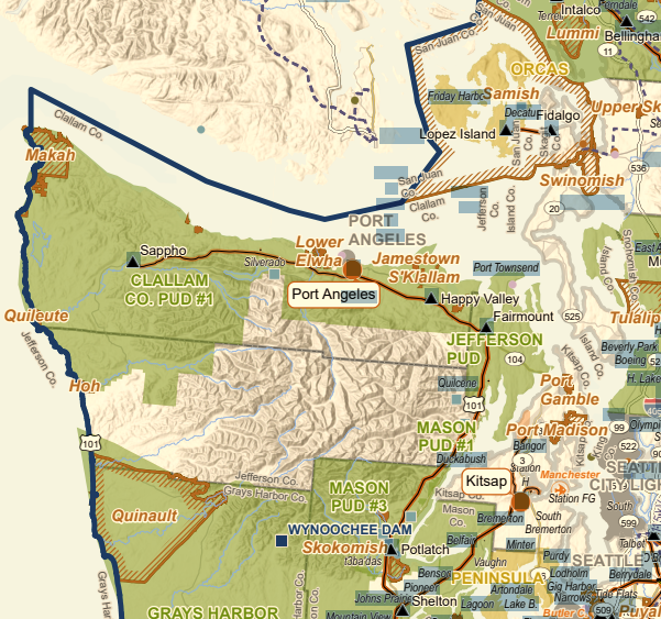
What would happen if that power source were cut off, or supplies greatly reduced, or prices weaponized against us? The state of Oregon as well as the state of Washington are quite vulnerable. It seems plausible to me, in the extreme case, that the states of Oregon and Washington could just seize the BPA and administer its operation themselves. After all, almost all these dams and power stations are in Washington state or on the Columbia River, shared by both states.
Social Security & Medicare:
The average age of a Sequim resident is at or above the retirement age.
AI Overview: Sequim, Washington has an estimated population of about 8,215 residents within its 6.32 square miles. [1]
Population & Age
- Median Age: Approximately 62.6 years old, reflecting Sequim's popularity as a retirement community.
- Senior Population: Around 45.6% of residents are aged 65 and older.
- Gender Distribution: Roughly 54.1% female and 45.9% male. [1, 2]
Race & Ethnicity
- White: 83% to 85.3% alone
- Two or More Races: ~6%
- Hispanic or Latino: ~4% to 8.5%
- Asian / American Indian / Black: Small percentages (<3% to 4% each) [1, 2, 3, 4]
Income & Economy
- Median Household Income: $59,707
- Per Capita Income: $37,082
- Poverty Rate: 12.9%
- Top Industries: Health Care & Social Assistance, Retail Trade, and Accommodation & Food Services. [1, 2]
Housing
- Homeownership Rate: 61.6% owner-occupied
- Median Home Value: $408,700
- Median Gross Rent: $1,195
- Average Household Size: ~1.85 to 1.9 persons per household [1, 2]
How much of Sequim’s (and the county’s) income is derived from federal Social Security checks and Medicare and Medicaid payments? What is this town and county’s “Federal balance of payments?” What could we do if that source of income were drastically reduced, or cut off, or weaponized against us? https://www.pbs.org/newshour/show/trump-administration-halts-minnesota-medicaid-funds-over-fraud-allegations
I recommend that we go ahead, swallow hard and think about it! The best possible outcome is that nothing would happen. On the other hand, it seems prudent to have a plausible plan of action ready if the train starts to go off the rails.
Economic Income:
How much of the city’s and especially the county’s economic income is derived from Federal resources? In Sequim there is the PNNL. In Clallam County, there are the Coast Guard, Olympic National Park, Federal grants (highways especially), and income from forestry and logging conducted in the National forests around here. How could the city, the county and its citizens respond in the case that these commercial sources of income were endangered? Here is another vulnerability: how much of our critical food, fuel and construction supplies come out here in trucks coming up Highway 101? How many of our citizens are being forced to travel down Hwy 101 to seek medical care in Kitsap County?
How to Respond:
Engineers aren’t frightened by problems. Problems are viewed as opportunities: the bigger the problem, the bigger the opportunity is. The opportunity is to create something that has never existed before. I prefer to view this gradual state of collapse described above as a process of transformation. We cannot and do not want to put things back the way they were before. This situation is an opportunity for a transformation into a brand-new situation, the transformation into a resilient Sustainable Society. This Sustainable Society, planet-wide, can be a brand-new situation that has never existed before.
Social cohesion:
First, I suspect that it is urgent to initiate and strengthen social cohesion. It seems like a priority to maintain our local social cohesion and institutions as well as our commercial and financial capital resources. These are essential to maintaining our resilience and way of life. Do we just cross our fingers and “hope” that our federal government, like a sick person, will just slowly develop an immunity to tyranny and recover from its current disease of authoritarianism? Does this Federal authoritarianism resemble a bout of measles from which we will recover? Or is this authoritarianism more like the onset of a kind of political and social cancer that constitutes a mortal threat to the Republic? Our Forefathers worried about this exact situation, and they were concerned that authoritarianism constituted a mortal threat to the Republic.
Do you want to live under a new form of tyranny far worse than that of Imperial Rome, ruled by an American Caesar from his palace at the White House? Do we prefer to live in a perpetual state of fear and resistance like the battered neighborhoods in Minneapolis? Or is it time to at least consider going our own way?
My own neighborhood is an example. We should get to know one another and participate in at least one or more annual social events, like a neighborhood 4th of July picnic and fireworks, like our neighborhood did when I lived in Oregon. We older retired people living on a federal pension (Social Security) are the most vulnerable. Furthermore, our federal medical insurance policy, Medicare, is also vulnerable. We are the elderly: we have vulnerabilities and substantial needs. One of these key needs is increased health care. On the other hand, what assets can the elderly bring to the table? Housing is one. Most of us Boomers have acquired housing which is now becoming increasingly unavailable to the younger generations. I have noticed that many elderly Boomers now have one or more of their children living with them. The elders have another often-overlooked asset. Elders have experience and expertise, acquired over their careers and lives to contribute. They know where the cow patties are.
Consider the younger people: Gen-X, Millennials and Gen-Z. Their vulnerabilities are a lack of affordable housing, affordable childcare and decent paying jobs. They have had the gig economy foisted upon them. What do these younger working people bring to the table? They are young and vigorous. They can maintain careers and generate income (as long as these job remain available). They can grow food, erect new housing, raise the young and provide some needed healthcare to the elderly. They bring the enthusiasm and determination of the young to the table. They can contribute physical and psychic energy to the neighborhood. The younger men can offer physical defense for the neighborhood if, God forbid, that need should arise.
Then there are children of all ages, from new-born infants to teenagers. They bring a lot of needs and vulnerabilities to the table. They need domestic care, healthcare, socializing and education. But children are not just a liability. On the positive side, children offer the rest of us a sense of purpose and inspiration. They are our future, after all.
Resilient Infrastructure:
OK, consider a few disaster scenarios. Let’s start with an extended loss of power in the neighborhood. Almost all our power comes out here from the Columbia River dams on a long physically and politically vulnerable power line. (See the map above). Tyrants in D.C. could weaponize the BPA power line against us. Terrorists could blow up the power line and its transformers. We’re thrown into an extended blackout in the chill of winter. Now what? Can our HOA still pump water out of the well and into our homes? Will our faucets and toilets suddenly run dry? Our drain field is on a hill at the top of the neighborhood. Can the HOA still pump the septic tank effluent uphill and into the drain field? Or do some toilets run backwards when flushed, and shower drains start sourcing raw sewage into some people’s showers? It seems like the HOA needs an emergency extended power source in case of an emergency like this. The city of Sequim would face an equivalent situation on a much larger scale.
Most of the homes here, if not all of them, are electrically heated. No power means no heat. Now we’re all freezing. What’s the scenario here? Most stoves, ovens and refrigerators are also electrically powered. No power means no cooking, no refrigeration of food. What’s the scenario here? And we haven’t gotten to the issue of electrically powered lighting and of course, our electrically powered digital devices and Internet connections. We’re out of luck. This extended loss of electrical power bears some serious thought and planning.
This same methodology discussed above applies to other essential resources and infrastructure for our neighborhoods. Here’s a partial list: water, healthcare, employment, gasoline and other fossil fuels, education, breakdown in public order, etc. The timing of these scenarios runs from milliseconds, in case of electricity, to hours, to days, to months. These infrastructure concerns bear some thinking through.
Stages of Dysfunction and Response Scenarios
The next topic is about stages of dysfunction and the scenarios needed to respond to these stages of dysfunction. Not everything is going to fall apart in a catastrophic moment like we are used to viewing in the movies. We don't suddenly jump from Business As Usual (BAU) into total collapse. The dysfunction is predominantly gradual and partial, sometimes punctuated by relatively intense moments, as in the 2008 financial crisis or the Covid pandemic in 2020. This topic is a long topic and will hopefully be discussed in a future post that will be added to this discussion. This whole process of getting ready for and adapting to dysfunction is called "Resiliency".
A Financial Heads-Up
Posted 8-19-2026
There have been three recent financial developments that are worth noting:
- The 30-year US Treasury yields are quite high and rising. https://www.nytimes.com/2026/08/18/business/oil-prices-bonds.html?searchResultPosition=2
- The US National Debt hit a record $40 trillion dollars this month. We now pay more on the interest on the national debt than we do on defense.

A story on PBS Newshour features a report on this large national debt. https://www.pbs.org/newshour/show/national-debt-nears-40-trillion-how-we-got-here-and-why-it-matters
3. US stocks are currently overpriced.

The S&P 10 year Price-to-Earnings ratio is approaching a level last seen during the Internet Bubble crash back in 2000. This situation may be setting the stage for another financial crash which may be too large for the Federal Reserve and the US Treasury to ameliorate this time.
My Two Cents-worth Advice:
- I agree with the pundits. This situation suggests that we are in danger of a major financial correction. However, be aware that nobody can predict when it will happen.
- Get rid of any credit card or short term debt ASAP. Do not use credit to buy daily necessities like groceries, rent or gasoline.
- If possible, get to a conservative personal and family financial position quickly: Be able to survive in a situation where net family income exceeds family expenses. If necessary, make do with less.
Reports & Statements by the Experts
Intergovernmental Panel on Climate Change (IPCC)
Sponsored by the United Nations and winner of the Nobel Peace Prize, this is the world's premier authority on ongoing climate change. It issues reports on a regular basis. Its methods, data and documentation are transparent. This is the go-to source for comprehensive information on climate change, reports about climate change and its effects on the planet and international efforts in continuing research on the climate crisis.

The Post Carbon Institute

The PostCarbon Institute has an excellent introduction to the whole topic of Overshoot called "Welcome tothe Great Unraveling: Navigating the Polycrisis of Environmental and Social Breakdown. You can read their report onscreen, or download a PDF and buy the Print Version on their website. https://www.postcarbon.org/publications/welcome-to-the-great-unraveling/

Power: Limits and Prospects for Human Survival traces how humans have come to overpower the earth’s natural systems and oppress one another…with catastrophic implications.
Humanity must act quickly to prevent environmental and economic collapse. But is it even possible for human beings to deliberately rein in our power?
Power lays the groundwork to understand what we’ve done and how to fix it.
Go to their website to buy the book.
https://www.postcarbon.org/publications/power-limits-and-prospects-for-human-survival/